
Reviewed · CYCLING TOURS
Electric Bike Tour of Melbourne
Melbourne’s best introduction may come with two wheels and a small electric motor. This four-hour ride covers parks, bike paths, suburbs, sporting landmarks, old buildings, street art, and city lanes while keeping about 95% of the route away from busy roads. Guides such as Al, Marcus, Avalon, and Freddie bring plenty of local context, from the Kulin Nation and Aboriginal rights to gold rush wealth and Melbourne’s sporting culture.
I like the way the e-bike opens this tour to people who might not want a hard physical ride. I also like the useful route: you get the MCG, Shrine of Remembrance, Fitzroy Gardens, Chinatown, Hosier Lane, and Fed Square in one sweep. The main consideration is that this is as much a history and orientation tour as a cycling trip, so some stops involve longer talks and less riding than you may expect.
Key points to know
- About 95% off roads: Most of the route uses bike paths and parks, with some city-street riding.
- Four hours, including lunch: You stop at a Fitzroy café, but food and drinks cost extra.
- Small groups: The maximum is 10 people, which helps the guide keep the pace together.
- Strong city overview: The route links Melbourne’s major sights with nearby areas you may not reach on foot.
- Easy e-bike support: Helmet and electric bike use are included, with instruction before departure.
- Well suited to first-time visitors: You finish with a clearer map of the city and ideas for where to return.
Why an e-bike works so well in Melbourne
Melbourne is broad enough that walking can leave you with only a small slice of the city. A bus can cover ground, but it keeps you behind glass. This tour finds a useful middle path: you ride through the city, stop often, and still cover roughly 10 miles according to one rider’s estimate.
The electric assist matters. You still pedal, but hills, distance, and the need to keep up with a group are less of a worry. A 62-year-old rider who had never used an e-bike found the instructions from Freddie and Marcus enough to make the bike easy to handle. Other riders over 60 also found the pace manageable if they were in fair shape.
You should still be comfortable riding a bicycle. The tour is not a bus excursion with a token cycle section. There are moments on city streets, points where you must watch pedestrians, and stretches that require basic control and attention. One rider described the ride as challenging at times, while most found the paths and roads easy to manage.
The group limit of 10 is another plus. It is small enough for Al, Marcus, Avalon, Freddie, or another guide to watch the group, adjust the pace, and stop when needed. It also gives you a better chance to ask questions than you would on a large coach tour.
More bike tours in Melbourne:
- Famous Melbourne City Bike Tour
★ 5.0 · 779 reviews - The Best of Melbourne Bike Tour
★ 5.0 · 671 reviews - Electric Bike Tour of Melbourne
★ 4.7 · 210 reviews
Southbank and the story beneath the city
The ride begins at 20 Rebecca Walk, near the Yarra River, at 10:00 am. One note worth checking before you set off: a rider reported that the practical meeting point was 2 Rebecca Walk rather than 20. Confirm the exact location with your booking information on the day.
The first stop is Southbank, where the guide pays respect to the Kulin Nation. This is not a throwaway opening. It frames Melbourne through the fact that the land was never ceded, then moves into the settler figures who helped shape the city.
You will hear about Aboriginal people, colonial settlement, and the forces that made Melbourne grow. The tour also touches on William Barak, an Aboriginal leader, activist, cultural ambassador, educator, and advocate for Aboriginal rights. If you want a city tour that treats Melbourne’s past as more than gold rush dates and grand buildings, this early context matters.
The pace here is measured. The stop may be listed as five minutes, but the wider commentary can run longer. One rider felt that the opening history lasted 10 to 15 minutes and wanted more time on the bike. That is a fair warning for anyone choosing this mainly as a cycling workout.
The Shrine and Melbourne’s public memory
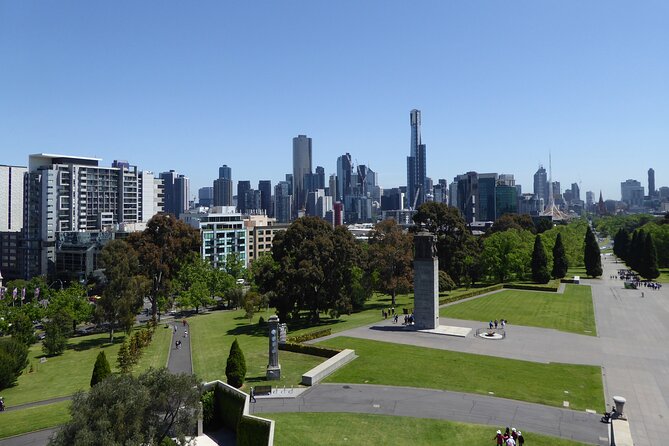
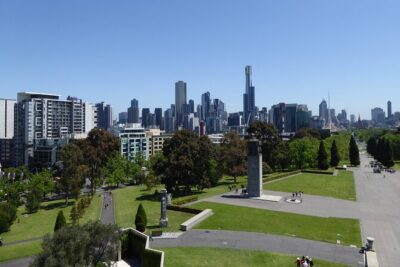
The Shrine of Remembrance gives the tour a quiet change of tone. Victoria’s largest and most visited war memorial is also an important place for understanding how Australia remembers military service.
Your guide uses the stop to connect the memorial with wider Australian history and with William Barak’s role in public life. The value here is not only the building itself. You begin to see how civic spaces, Aboriginal rights, war memory, and national identity overlap in Melbourne.
You will not have a long formal visit inside the memorial as part of this route. Think of it as an outdoor orientation stop, with time to take in the setting and hear the essential background before moving on.
The MCG and the city’s sporting identity
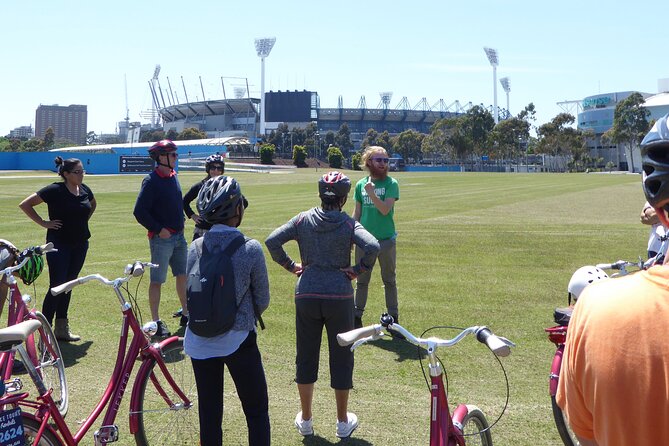
At the Melbourne Cricket Ground, you get one of the clearest explanations of why sport matters so much here. The MCG is more than a large stadium. It helps explain Melbourne’s claim to be the sporting capital of the world and shows how strongly major events shape local identity.
The stop works even if you are not a cricket fan. Athletic contests, stadium crowds, and public rituals are part of how Melburnians see their city. Sports followers will naturally want more time here, but the tour’s short stop gives everyone enough context to recognize the importance of the ground.
This is one of several points where the tour favors breadth over a detailed interior visit. You see the setting, hear the story, and keep moving.
A few more Melbourne trips worth a look
- Mornington Peninsula guided e-bike tour
★ 5.0 · 23 reviews
Fitzroy Gardens and Cook’s Cottage
Fitzroy Gardens brings greenery, old paths, and one of the tour’s more unusual details: Cook’s Cottage. The cottage was shipped from England and rebuilt brick by brick in the gardens.
The story says plenty about Melbourne’s relationship with British history. It also gives you a reminder that the city was built from imported ideas, materials, people, and institutions, even as it developed its own character.
The gardens provide a welcome break from urban streets. You can pause, look around, and let the e-bike do some of the work while the guide explains the setting. Since the tour moves through several parks, this is also where the mostly off-road design begins to feel especially practical.
Parliament House and gold rush ambition
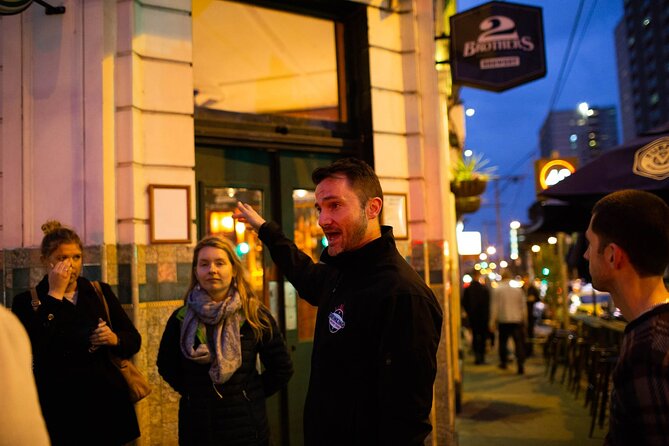
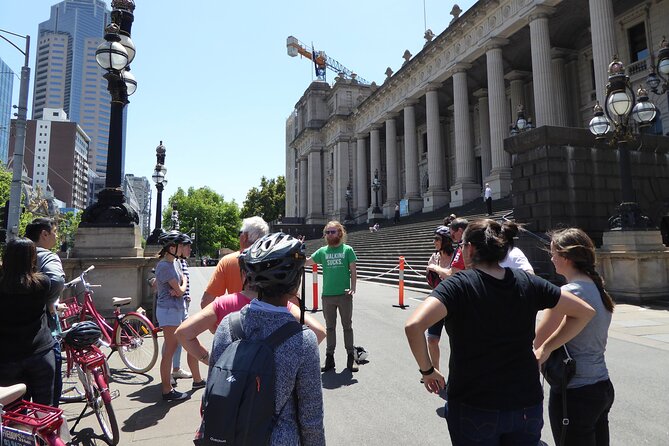
Parliament House of Victoria was built to show wealth and confidence. That wealth came from the gold rush, when Melbourne became one of the richest cities in the world.
This stop helps you read the grand civic buildings as evidence of economic ambition. The architecture is not simply decoration. It reflects a period when Melbourne wanted to show that it belonged among the world’s important cities.
The guide’s wider commentary may also connect the building to settlement, politics, and the growth of Victoria. If you prefer quick photographs and constant motion, this is another point where the historical detail may feel long. If you like knowing why a building exists before you photograph it, you will get more from the pause.
The Royal Exhibition Building and Fitzroy lunch
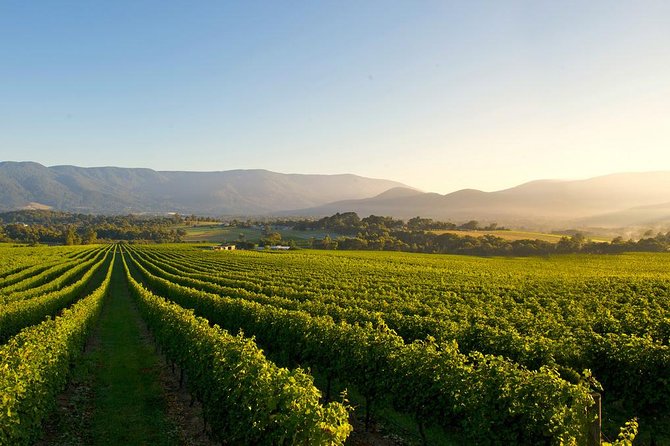
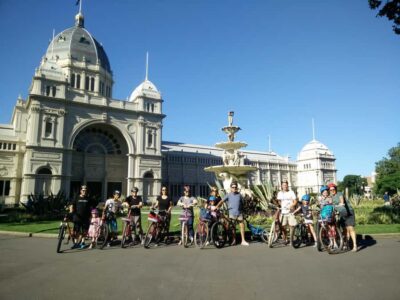
The Royal Exhibition Building adds another layer to Melbourne’s public story. It represents the international exhibition movement of the 19th century, when countries gathered to display products, technology, ideas, culture, and national pride.
The building makes a good cycling stop because it links architecture to global trade and ambition. Melbourne was not merely growing inward. It wanted to show the world what it had become.
After this, the route heads toward North Fitzroy for lunch. This is one of the most practical parts of the day because it breaks up the ride and gives you time in a neighborhood rather than only at major landmarks. The café is a favorite of the tour team, and the area has an eclectic, bohemian feel.
Lunch is not included. Bring extra money for food and drinks, and remember that the five-minute itinerary listing does not describe the full time you will spend eating. This stop is useful for anyone who wants a taste of local café culture, though you should not expect a hosted meal or a fixed menu.
Chinatown and the gold rush connection
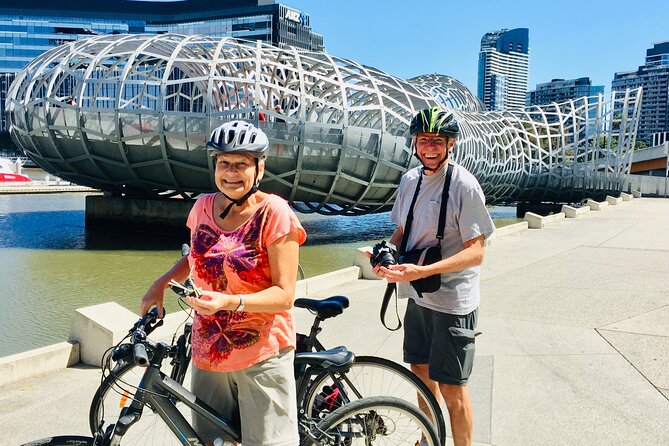
Chinatown sits in the center of Melbourne and dates to 1851, when it grew in response to the gold rush. The stop adds a different human story to the grand buildings and official landmarks earlier in the day.
The tour uses Chinatown to show how migration helped shape Melbourne. The city’s identity is not only British architecture, Australian sport, and colonial institutions. It also comes from the communities that arrived, worked, opened businesses, and built lives here.
The route gives you an introduction rather than a food tour or a long neighborhood walk. You can mark the area as a place to return later for a meal.
Hosier Lane and Melbourne’s street-art edge
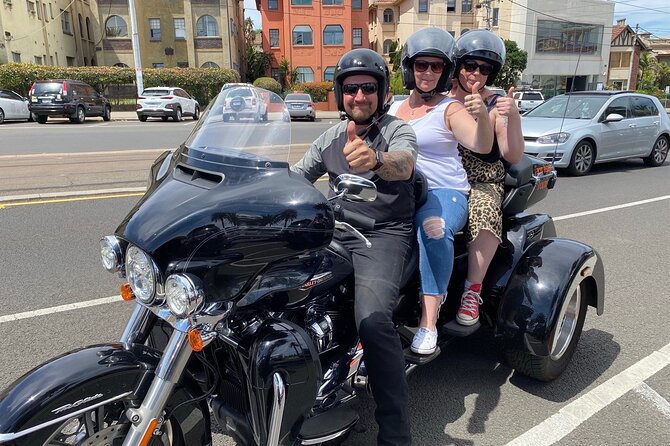
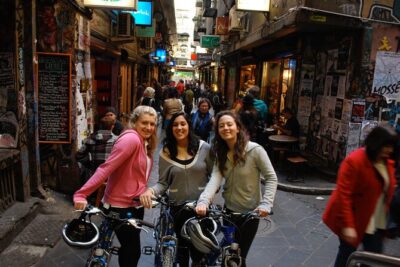
Hosier Lane is the tour’s most visual stop. You park the bike and look down a bluestone lane covered with changing street art.
This is a good counterpoint to Parliament House and the Royal Exhibition Building. Those sites show Melbourne’s formal public face. Hosier Lane shows its more rebellious, creative side, with art layered across the walls.
The stop is short, so take your photos promptly. Street art changes, and the lane can be busy with people looking, photographing, and moving through. The guide can explain why laneways and street art are part of Melbourne’s modern identity, but you will have time to explore the lane in only a limited way.
Fed Square and the Immigration Museum view
Federation Square gives the route a final look at central Melbourne. It connects Flinders Street with the Yarra River and sits near St Paul’s Cathedral and older heritage buildings.
The square is useful for orientation. You can understand how the river, station, cathedral, streets, and public gathering spaces fit together. It also contrasts nicely with the older structures around it, since the square’s modern design is one of the city’s more debated architectural features.
The last listed stop is an overlook toward the Immigration Museum. Melbourne’s population includes people from many backgrounds, and the guide uses this point to consider the city through the experience of immigrants.
That makes a fitting end to the route. You begin with the Kulin Nation and settlement, pass through war memory and gold rush expansion, then finish with migration and the city Melbourne became. The tour gives you a broad framework rather than one single story.
How much cycling will you really do?
The route is described as a four-hour relaxing ride, but the day includes frequent stops and guided explanations. One rider estimated about 1.5 hours of actual biking, while another estimated roughly 10 miles overall. These figures can vary with the group, traffic, stop length, and guide.
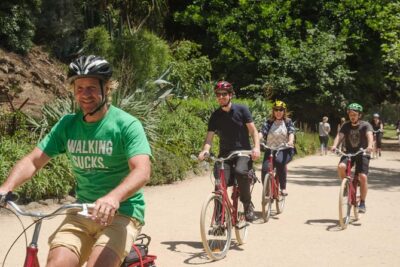
Most of the riding is on bike paths and through parks. That makes the route calmer than a city tour spent mainly in traffic, but it does not remove every road crossing or urban hazard. You need to follow the guide, watch for pedestrians, and stay with the group.
The tour is best for someone who wants active sightseeing, not a full-day cycling challenge. You will pedal enough to feel that you have moved through Melbourne, but the e-bike and regular stops keep the effort reasonable.
The guides shape the day
The strongest part of this experience is the guiding. Al is described as a walking, writing historian who brings detailed context to the stops. Marcus is noted for clear instruction and local background, while Avalon is relaxed, friendly, and good at keeping the ride enjoyable. Freddie receives praise for making first-time e-bike riders feel comfortable.
Guides can vary, so you should not book expecting one specific person unless the operator confirms it. Still, the pattern is clear: the tour depends heavily on a guide who can connect colonial history, Aboriginal culture, sport, migration, architecture, and present-day Melbourne without losing the group.
Some guides give a lot of detail. That is a benefit if you want substance, but it may be tiring if English is not your first language or if you mainly want to ride. The best way to enjoy the tour is to treat it as a moving history lesson with a substantial cycling element, not as a silent sightseeing ride.
Price, practical fit, and value
At $85.35 per person, the tour sits in a reasonable range for a four-hour guided activity that includes an e-bike, helmet, and a small group. You are paying for the bike, route planning, instruction, local commentary, and the chance to see several districts without arranging transport between them.
Lunch costs extra, as do other food and drinks. Hotel pickup and drop-off are not included, so plan your way to Rebecca Walk. A mobile ticket is provided, and confirmation arrives at booking.
I see the best value for a first visit, a short stay, or anyone who wants a quick city framework before exploring alone. If you are already familiar with Melbourne and want quiet back streets or a long, uninterrupted ride, the price may feel less attractive.
Free cancellation is available if you cancel at least 24 hours before the 10:00 am start. Changes or cancellations inside that window are not refunded, and the activity requires a minimum number of people to operate.
Who should book this Melbourne ride?
Book it if you want to cover a lot of ground, learn how Melbourne fits together, and stay active without committing to a demanding ride. It is a particularly good choice for couples, older riders in fair shape, first-time visitors, and anyone with only a few hours to get oriented.
It is less suitable for small children, based on the practical feedback provided, or for riders seeking a hard workout. It may also disappoint you if you want long visits inside museums, a detailed street-art tour, or two and a half hours of continuous cycling.
Should you book the Electric Bike Tour of Melbourne?
I would book this for a first or short visit. The route links major landmarks with Fitzroy, Chinatown, Southbank, parks, and laneways, while the electric assist keeps the day within reach for many fitness levels.
Go in expecting history, frequent stops, and a guide-led overview. Bring money for lunch, arrive ready to ride in city conditions, and allow the guide’s stories to be part of the experience. If your priority is maximum cycling time, choose another route. If you want a friendly, efficient introduction to Melbourne with plenty of useful context, this tour earns its strong reputation.
FAQ
How long does the Electric Bike Tour of Melbourne last?
The tour lasts approximately four hours, beginning at 10:00 am and returning to the meeting point.
How much does the tour cost?
The listed price is $85.35 per person.
Where does the tour start?
The listed meeting point is 20 Rebecca Walk, Melbourne VIC 3000, Australia. One practical note reported for the meeting location is 2 Rebecca Walk, so confirm the exact point with your booking information.
Where does the tour finish?
The activity ends back at the meeting point.
Is lunch included?
No. The tour stops at a café in North Fitzroy, but food and drinks are not included. Bring extra money for lunch.
What is included in the tour?
The price includes the guided bike tour, use of an electric bike, and use of a helmet.
How many people can join?
The tour has a maximum of 10 participants.
Do I need to be an experienced cyclist?
The tour is designed as a relaxed ride with about 95% of the route on bike paths and in parks. You should still be comfortable riding a bicycle, following a guide, and handling some city-road sections.
Can I cancel for a refund?
You can cancel for a full refund up to 24 hours before the experience starts. Cancellations or changes made less than 24 hours before the start are not refunded.
Recently added around Melbourne
- Melbourne: Private Yarra Valley Winery Lunch by Helicopter★ 5.0 · 10 reviews
- Yarra Valley: Bus Wine Tour with Lunch and a Glass of Wine★ 5.0 · 4 reviews
- Werribee Mansion & Sovereign Hill Tour★ 3.7 · 3 reviews
- Yarra Valley Foodie Tour, Devonshire Tea, Cheese and Chocolate★ 5.0 · 10 reviews
- Yarra Valley Guided Bike Tour | Food & Wine Region★ 5.0 · 19 reviews
- Yarra River Half-Day Rafting Experience★ 5.0 · 21 reviews
- From Phillip Island: Wine and Wildlife Tour with Penguin Parade★ 5.0 · 34 reviews
- Whitewater Sports rafting on the Yarra river★ 4.5 · 5 reviews
Cycling Tours, compared.
Mornington Peninsula Self-Guided Bike Tour | Food & Wine Region
Read our review →
Yarra Valley Guided Bike Tour | Food & Wine Region
Read our review →
Browse the lists this tour appears in