
Reviewed · WALKING TOURS
Melbourne Walking Tours
Melbourne’s best introduction may be a walk through its lanes and arcades, where grand gold rush buildings sit beside spray-painted walls and small cafés. This tour links Parliament House, Fitzroy Gardens, ACDC Lane, Hosier Lane, Chinatown, and the State Library in one three to four-hour outing.
I like the small maximum of 10 people, which gives the guide room to adjust the pace and answer questions. I also like the mix of major sights and lesser-known details, plus coffee from an independent café and free tram travel within the city center.
The main consideration is pace. You see many places in a short time, often with only five minutes at the headline stops, so this is an orientation walk rather than a series of long museum visits. If you want extended time inside every building, you will need to return on your own.
Key points to know before booking
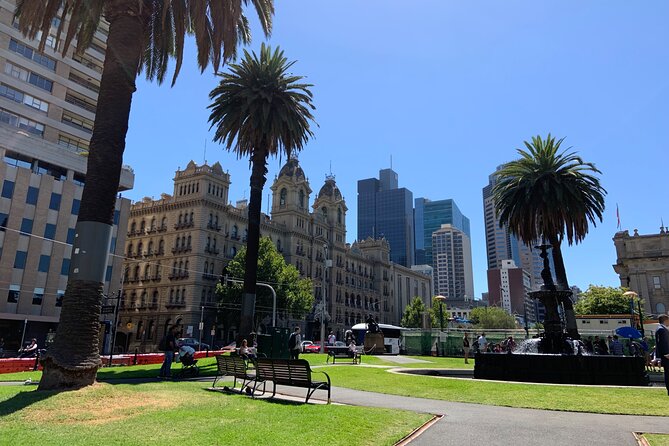
- Parliament House is the 10 a.m. starting point: Meet on Spring Street in East Melbourne, then walk toward the central city.
- The route covers old and modern Melbourne: Gold rush buildings, Victorian arcades, Chinese-Australian history, gardens, street art, and a major library all appear.
- You use the Free Tram Zone: This helps connect parts of the route without adding local transport costs.
- Coffee is part of the experience: The tour includes coffee from one of Melbourne’s independent cafés.
- The group is capped at 10 people: A small group makes it easier for the guide to tailor the walk to your interests.
- The tour ends where it begins: Plan to finish back at Parliament House after roughly three to four hours.
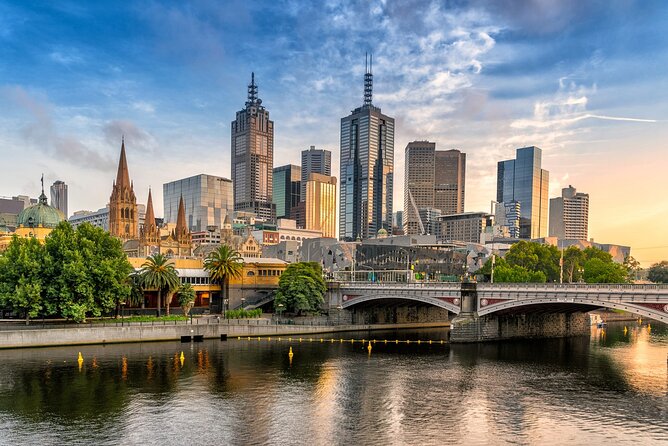
A smart first look at Melbourne’s city center
The route works because Melbourne does not reveal itself through one grand sight alone. Its character comes from sharp contrasts: a government building from the gold rush era, a leafy garden, a lane named for AC/DC, ornate shopping arcades, Chinese restaurants, and a great public library.
You are on foot for most of the experience, which lets you notice details that are easy to miss from a vehicle. The guide can point out building façades, street art, lanes, and city corners while giving you a sense of how the central district fits together.
The tour starts at 10 a.m. at Parliament House of Victoria. That is a useful meeting point because it sits at the edge of the city center, close to East Melbourne and the gardens. The listed meeting address is Spring Street, East Melbourne VIC 3002.
With a maximum of 10 people, the walk should feel more personal than a large coach-style city tour. The guide can ask what interests you, and the experience may shift a little for the group. One private outing was tailored around the individual’s interests, with time to explore the State Library and the war memorial at an easier pace. That flexibility is worth asking about when you meet your guide, though the standard route remains the main structure.
More walking tours in Melbourne:
- Ultimate Melbourne Walking Tour: History, Laneways & Culture
★ 5.0 · 1,451 reviews - Great Ocean Road Tour Plus Koalas, Forest Walk and Morning Tea
★ 4.5 · 1,068 reviews - Great Ocean Road 12 Apostles & Rainforest Walk with Morning Tea
★ 4.5 · 549 reviews
Parliament House and Melbourne’s gold rush wealth
Parliament House of Victoria is the opening stop, and it gives you an immediate reminder of the wealth that flowed through Melbourne during the gold rush era. The building is home to the Victorian Government and has the formal scale you expect from a major civic landmark.
The scheduled stop is short, about five minutes, with admission free. That means you should think of it as an exterior introduction rather than a full visit through the government chambers. Your guide can set the scene, explain why the building matters, and get the walk moving.
The next location is an old treasury office and gold vault site, now used as a museum. The exact name is not provided, so do not book this tour expecting a guaranteed extended museum visit. Still, the stop adds useful context: Melbourne’s grand buildings were not decorative accidents. They were tied to gold, government, banking, and the rapid growth of the city.
Fitzroy Gardens and Cooks Cottage
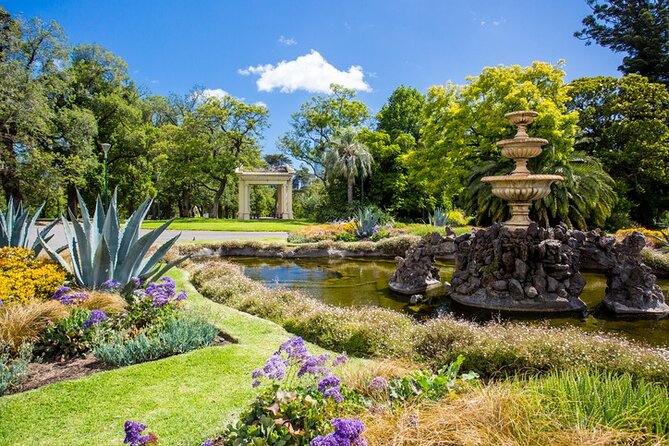
The route then heads into Fitzroy Gardens, one of the city’s most pleasant breaks from stone and traffic. You have about 15 minutes here, longer than at most of the urban stops, so you get a chance to slow down and see how Melbourne uses open space within the central district.
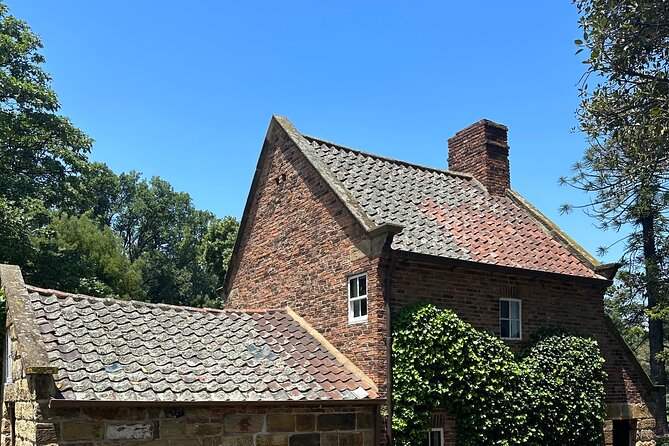
Cooks Cottage is also in the gardens. The tour does not promise admission inside, but the cottage gives the guide a natural way to discuss early exploration and Melbourne’s connection to Captain Cook. If you want to tour the interior, ask whether there is enough free time, since the main walk continues through several other locations.
I especially like this part of the route because it changes the rhythm. After civic buildings and city streets, the gardens give your feet a rest and your eyes a break. The 15-minute visit is not long enough for a full garden stroll, but it is enough to make the walk feel less like a checklist of buildings.
ACDC Lane and Hosier Lane
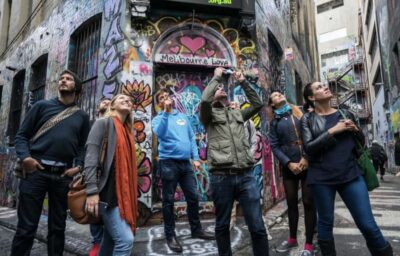
Melbourne’s street art appears in quick succession at ACDC Lane and Hosier Lane. ACDC Lane is named for Australia’s famous rock band and is known for its AC/DC-themed street art. The stop lasts about five minutes, so you will have time to look, take photographs, and hear why this narrow street has its name.
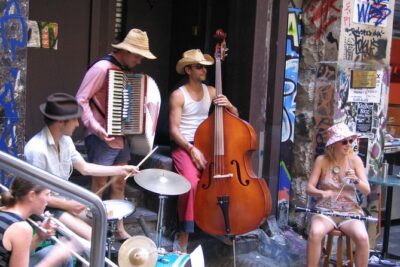
Hosier Lane is Melbourne’s best-known laneway and another five-minute stop. Its walls change over time, so the exact paintings and tags are never the fixed attraction. The point is to see how Melbourne treats laneways as public art spaces rather than leftover service corridors.
These stops are short for a reason. Street art is best viewed while moving through it, and a guide can explain the city’s lane culture without turning the walk into a long lecture. Still, photographers may wish they had more time. If you see a wall you want to study, note its location and return later.
The two lanes also show why a walking tour works well here. A passing vehicle cannot take you into these narrow spaces, and a standard monument tour may skip them. They are small pieces of the city, but they help explain Melbourne’s modern personality.
A completely different way to spend the day:
- Great Ocean Road Small-Group Eco Tour from Melbourne
★ 5.0 · 6,607 reviews - From Melbourne: Great Ocean Road, 12 Apostles, Wildlife Tour
★ 4.7 · 6,020 reviews - Laid back, Yarra Valley Wine Tour: Wine, Cider, Gin, Beer + Choc
★ 5.0 · 4,552 reviews - Great Ocean Road Reverse Itinerary Boutique Tour – Max 11 Guests
★ 5.0 · 4,186 reviews
Flinders Street and Melbourne’s central square
The route continues to Melbourne’s central square, then to Flinders Street Station. The square is not named in the supplied details, so you should treat this as a central civic gathering place rather than expect a specific guided building visit.
Flinders Street Station is Melbourne’s most recognizable building and its main train station. The stop is scheduled for about five minutes, enough for an outside look and an explanation of its role in the city.
This is one of the tour’s strongest visual moments. The station is easy to recognize, but a guide helps turn a familiar photograph into a useful point of orientation. You begin to understand where the central city, river area, shopping streets, and major public spaces sit in relation to one another.
The brief timing is both useful and limiting. You get the city’s essential image without spending half the morning inside a transport hub. If you want to explore the station in detail, make a note to return after the tour.
The Block Arcade and Royal Arcade
The Block Arcade brings you into the elegant commercial world of late Queen Victoria’s Melbourne. Its decorative interior is a sharp contrast to the painted walls of the laneways. You stop for about five minutes, which gives you a quick look at the architecture and the small-scale shopping atmosphere.
The Royal Arcade is Australia’s longest-standing arcade and is home to Gog and Magog. These figures are among its memorable details, and the stop gives the guide another way to explain how Melbourne’s shopping culture developed around covered pedestrian passages.
I like the pairing of these two arcades because they are close in theme but not identical in feel. Together they show how the city protected shoppers from weather while creating elaborate places to browse. You also get a practical introduction to central Melbourne’s layout, where arcades and lanes connect streets in ways that are not obvious on a map.
Again, five minutes is a preview, not a shopping visit. If you want to examine the shop windows, find a café, or spend time on the architectural details, you will need to return after the tour. That is not a flaw if you see the walk as a first pass through the city.
The GPO, central shopping streets, and Chinatown
The route passes Melbourne’s central shopping street and the magnificent GPO building. The exact street is not identified in the supplied details, but the stop adds another piece to the central-city picture: grand commercial architecture beside busy retail streets.
From there, the tour reaches Chinatown Melbourne. It was established by Chinese gold diggers and is described as one of the longest-running Chinatowns in the world. This is an important part of the walk because it broadens the gold rush story beyond government buildings and European architecture.
You will have only about five minutes at Chinatown, so do not expect a meal or a long restaurant crawl during the scheduled tour. Instead, use the stop to notice the street setting and hear how Chinese immigrants became part of Melbourne’s early gold-era economy.
If food interests you, Chinatown is a place to revisit later. The tour gives you the location and context, but the short stop does not allow time for a full meal. That is another example of the walk’s main purpose: helping you decide where to spend more of your own time afterward.
The State Library Victoria as the final major stop
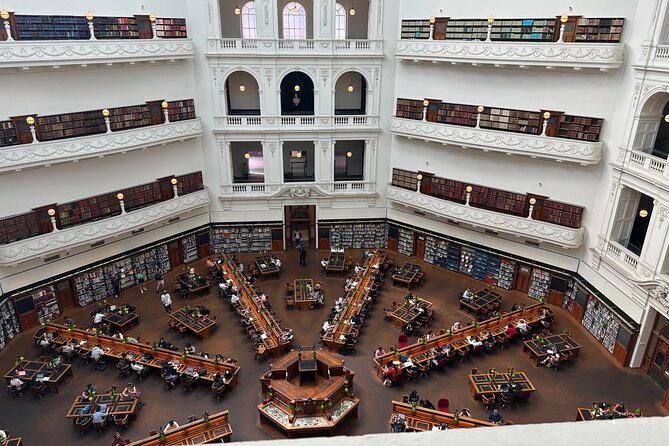
The State Library Victoria is the last named stop and one of the most worthwhile. It opened in 1856 and includes exhibitions, art, and the La Trobe Reading Room. The building offers a different kind of city experience from the arcades and lanes. Here, Melbourne’s public life is tied to books, learning, art, and civic space.
The scheduled visit lasts about five minutes, but the tour can allow some independent time depending on the group and the guide. One customized outing left time to explore the library and the war memorial at an individual pace. You should confirm the plan on the day, since the standard walk includes many stops within three to four hours.
The library is also a good place to decide what you want to revisit. If you like architecture, exhibitions, or quiet public interiors, you may want to return for a longer visit. The guide provides the introduction, then you can choose whether it deserves more of your day.
After the State Library, the activity ends back at the Parliament House meeting point. Since the route covers a large portion of central Melbourne, the return is useful. You are not left at an unfamiliar corner with no clear end point.
What the $86.07 price gives you
At $86.07 per person, this is not the cheapest way to wander central Melbourne. Much of the sightseeing happens outdoors, and admission to the listed stops is free. You are paying mainly for the guide’s route, explanations, local perspective, small-group setting, coffee, and the convenience of linking many areas in one morning.
That value is strongest if you are new to Melbourne and want a clear orientation before exploring alone. You see the city’s main visual markers, learn where the lanes and arcades are, and get a practical sense of what deserves a second visit.
The price is harder to justify if you already know central Melbourne well or prefer to move at your own speed. You could visit many of these places without a paid guide. The benefit here is the connection between them, especially the way the tour ties gold-era government, Chinese settlement, public gardens, street art, shopping arcades, and the State Library into one story.
Coffee from an independent café is included, and the Free Tram Zone is used during the tour. Alcohol is not included. The group cap of 10 helps protect the experience from feeling like a large procession.
Who will get the most from this walk
I would choose this tour for a first visit, a short stay, or a morning when you want to understand Melbourne before making your own plans. It is also a good fit if you like city history but do not want to spend the whole day inside museums.
The tour suits people who enjoy walking and can manage three to four hours with several short stops. Most people can participate, and service animals are allowed. The meeting point is near public transport, and the Free Tram Zone makes the route easier to cover.
You should choose something else if your priority is a long museum visit, a food-focused tour, or detailed time at each attraction. The itinerary moves briskly. The reward is breadth, not depth.
You can cancel for a full refund up to 24 hours before the 10 a.m. start time. Changes or cancellations made less than 24 hours before the start are not accepted for a refund, and the cut-off uses Melbourne local time.
Should you book Melbourne Walking Tours?
Book it if you want a well-rounded first look at Melbourne with a small group, a guide, coffee, and a route that mixes famous sights with lanes and arcades. The strongest parts are the variety, the short travel connections, and the chance to shape the walk around your interests.
Skip it if you already know the city center or want to linger at every stop. For everyone else, the best plan is to use the tour as a map for the rest of your stay. Mark the State Library, Chinatown, the arcades, or any lane that catches your eye, then return later with more time.
FAQ
Where does the Melbourne walking tour start?
It starts at Parliament House of Victoria on Spring Street, East Melbourne VIC 3002, Australia.
What time does the tour start?
The tour starts at 10:00 a.m.
How long does the tour last?
The experience lasts approximately three to four hours.
Does the tour use public transportation?
Yes. The tour uses Melbourne’s Free Tram Zone when public transportation is needed.
Is coffee included?
Yes. Coffee from one of Melbourne’s independent cafés is included. Alcoholic beverages are not included.
How many people can join the tour?
The tour has a maximum of 10 participants. It ends back at the Parliament House meeting point.
Recently added around Melbourne
- Melbourne: Private Yarra Valley Winery Lunch by Helicopter★ 5.0 · 10 reviews
- Yarra Valley: Bus Wine Tour with Lunch and a Glass of Wine★ 5.0 · 4 reviews
- Werribee Mansion & Sovereign Hill Tour★ 3.7 · 3 reviews
- Yarra Valley Foodie Tour, Devonshire Tea, Cheese and Chocolate★ 5.0 · 10 reviews
- Yarra Valley Guided Bike Tour | Food & Wine Region★ 5.0 · 19 reviews
- Yarra River Half-Day Rafting Experience★ 5.0 · 21 reviews
- From Phillip Island: Wine and Wildlife Tour with Penguin Parade★ 5.0 · 34 reviews
- Whitewater Sports rafting on the Yarra river★ 4.5 · 5 reviews
Walking Tours, compared.
Ultimate Melbourne Walking Tour: History, Laneways & Culture
Read our review →
Great Ocean Road Tour Plus Koalas, Forest Walk and Morning Tea
Read our review →
Great Ocean Road 12 Apostles & Rainforest Walk with Morning Tea
Read our review →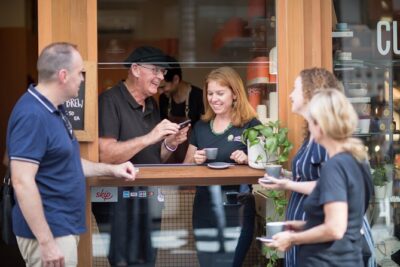
Original Melbourne Lanes and Arcades Walking Tour
Read our review →Ultimate Melbourne Walking Tour: History, Laneways & Culture
Read our review →
Aboriginal Heritage Walk – Royal Botanic Gardens Victoria, Melbourne Gardens
Read our review →
Browse the lists this tour appears in